The post 5 Highly Addictive Raw Beauty Recipes appeared first on HUM Nutrition Blog.
]]>No-Bake Energy Bites Recipe
No oven or baking tools needed—just five natural ingredients including our Raw Beauty Mint Chocolate Chip Infusion and lots of love! They make for a healthy snack, dessert, or breakfast on the go.Overnight Oats with Raw Beauty Recipe
This healthy breakfast Raw Beauty recipe only takes minutes to make! Plus, you can make them in batches for a quick and easy meal on the run.Chocolate Mint Superfood Milkshake Recipe
Lauren Talbot, certified nutritionist and author of Clear Skin Detox Diet, shows us how to make a healthy and decadent chocolate shake filled with good-for-you ingredients like cacao, coconut meat, and our Raw Beauty Green Superfood Powder in Mint Chocolate Chip. Bonus: Watch the video to find out what her secret stress-busting ingredient is.Beauty-Boosting Beauty Smoothie Recipe
This one requires only six ingredients. Check out this simple Raw Beauty recipe using our Tahitian Vanilla & Berry Infusion flavor for more glowing skin, featuring healthy fats from almond butter and antioxidants from blueberries.Julianne Hough’s Pretty Powder Smoothie Recipe
Get the recipe that dancing superstar Julianne Hough whips up for a boost of energy and flawless skin! https://www.youtube.com/watch?v=vkGm_r7oDKQ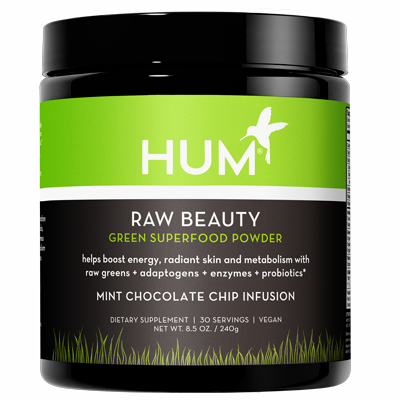

The post 5 Highly Addictive Raw Beauty Recipes appeared first on HUM Nutrition Blog.
]]>The post Parisian Women’s Secret Ingredient to Glowing Skin appeared first on HUM Nutrition Blog.
]]>A Reflection on Parisian Beauty and Wellness
When visiting Paris and sipping your café in a typical coffee shop, you’ll notice one thing immediately: The majority of seats are facing the street. Rather than staring at each other for an hour, people observe unknowing pedestrians walking by and comment on their appearance. I happened to be a student in Paris, so the number of hours I spent in coffee shops probably crept up to four digits. With that amount of mental footage, one thing always stood out to me: Parisians appear to be effortlessly good-looking. Paris, at least at the time when I lived there, completely lacked a gym culture. Plus, the city can be extremely polluted. So how come most people were in pretty decent shape and had really good skin without too much makeup? Extra toxins such as alcohol and tobacco are also popular in the Parisian diet, so what’s the secret? “A real Parisian girl will never leave home without her bottle of water,” says ex-Parisian and now LA-based blogger Valentina Mareuse of @mylittlecosmo. Since we’re obsessed with research at HUM, we investigated whether water is the secret ingredient to glowing skin. HUM’s lead nutritionist Alex Caspero, RD investigated, and gave us tips on how much one should drink and how to tell that if you’re dehydrated!The Beauty Benefits of Drinking Water
- Skin hydration gives you a natural glow
- Maintains your skin elasticity
- Detoxes and cleanses
- Curbs your appetite
- Increases energy so you can burn more calories
- Bonus: It’s also good for the hair, which happens to be 25 percent water

Q&A With Nutritionist Alex Caspero: Is water the secret ingredient to glowing skin?
Do we really need to drink eight glasses a day?
There’s no scientific proof that 64 ounces is the exact number that all of us need. However, it’s a rough estimate that works for the majority of the population. While it’s possible to have too much water (discussed below), most of us are slightly under-hydrated. Aiming for eight glasses is a good way to ensure that you’re getting enough. Though, remember, water comes in other sources like tea, juice, coffee, and food.Is it possible to drink too much water?
Yes; hyponatremia can be fatal and is caused by drinking too much water too quickly. You’re essentially diluting the blood, causing dangerously low levels of sodium and potassium, which can trigger a heart attack. It should be noted, though, that this condition is very rate.How can I tell if I’m dehydrated?
A good sign is urine color—check yours out every time you use the bathroom. A light-lemonade color is ideal; anything darker usually signals that you need more water. Be aware of your intake, even if you don’t feel dehydrated. If you haven’t drunk anything for a few hours, you likely need water.Do you really need to use a water filter or bottled water, or is the tap fine?
I prefer filtered water to reduce contaminants, but the tap will also work. For some, filtered water over tap water is a matter of taste preference. You can also purchase filters that sit over the tap, so you get filtered water every time you use it. I can’t stand the waste of plastic water bottles and will always opt for tap water over bottled if the option is there.Does sparkling water (over still) have any health benefits r disadvantages?
Sparkling water just has added CO2, which is fine. As long as your sparkling water doesn’t have any added sodium or flavoring, then it’s the same nutritionally as regular water.Do coffee or alcohol count as sources of hydration, or are they dehydrating?
While coffee is considered to be a diuretic, you’re still getting water from the beverage, so I consider it a wash. I don’t count coffee in my daily hydration count, but I don’t count against it either. Alcohol is different and will dehydrate the body more so than coffee.Do we carry water weight in our faces if we drink too much?
Water weight seems to be a very confusing topic; it’s one I hear often with my clients. It’s not related to how much water you drink, as being dehydrated can pull water to the surface, making you feel more bloated and puffy. Water weight is related to gravity and diet as a whole. In fact, the opposite is true; drinking more water flushes the body and can reduce bloating. So it really is a secret ingredient to glowing skin!Can drinking water help to lose weight?
It won’t help you burn fat, but it can help decrease bloating and keep you regular. Plus, it’s true that sometimes thirst is confused for hunger, so drinking enough can help with regular appetite.Is it true that often when we feel hunger it’s actually just thirst?
Most adults need to eat every three to five hours. If you find yourself hungry before this window, try a glass of water first. If you’re still hungry 10 to 15 minutes later, have a snack. You may find that you experienced thirst rather than actual hunger.Are drinks with electrolytes better? should we drink coconut water regularly?
I recommend plain water over anything with added electrolytes, unless you need to replenish after a hard workout or time spent outside. Since electrolytes work in ratios, it’s better to get them through food and a balanced diet instead of packing them in through beverages. Plus, many electrolyte-containing options have added sweeteners, flavorings, and calories, which really aren’t needed. However, if you find that you aren’t recovering well from workouts or are cramping, then you may need to replenish.When’s the best time to drink water?
Drink all the time! I often wake up and enjoy a big glass of water first thing in the morning. After my morning coffee, I fill my water bottle up and take it to my desk to sip throughout the day. My bottle holds 28 ounces, and my goal is to consume at least two bottles during the work day. Then, I’ll have another glass with dinner or before bed.What temperature is best?
Whatever temperature you’ll drink it at. There are some theories that drinking ice cold water makes your metabolism work harder, but the actual calorie difference is so negligible to make a difference that I ignore this. Most of us aren’t drinking enough, so whatever temperature you like is fine.What’s your view on plastic bottles?
I hate plastic water bottles for so many reasons, the first being how incredibly wasteful they are. Second, contaminants (like endocrine disrupters/BPA) from plastic can easily leach into the water, especially when the bottle is heated. (Think about how warm your bottle can get sitting in a hot car during a summer afternoon.) I prefer a reusable water bottle or glass bottle to fill up. When I’m traveling, I’ll stick a few slices of orange or lemon plus a sprig of rosemary, mint, or basil in a mason jar to fill with water when I get to the airport. It’s an easy, homemade water bottle that fits snugly in my purse or carry-on.Are there benefits to drinking alkaline water?
There isn’t much scientific data to back up the claims of alkaline water, so I recommend saving money and investing in a Brita/tap filter instead to reduce dissolvable solvents and contaminants. As far as acid and alkaline balances go, I’m much more interested in the overall diet than water. Most Americans’ diet, consisting of lots of animal protein and sugar, is highly acidic. Balancing that with plant-based foods, including lots of alkalizing leafy greens and vegetables, can help.
The post Parisian Women’s Secret Ingredient to Glowing Skin appeared first on HUM Nutrition Blog.
]]>The post Love HUM Vitamins? Get Them for Free! appeared first on HUM Nutrition Blog.
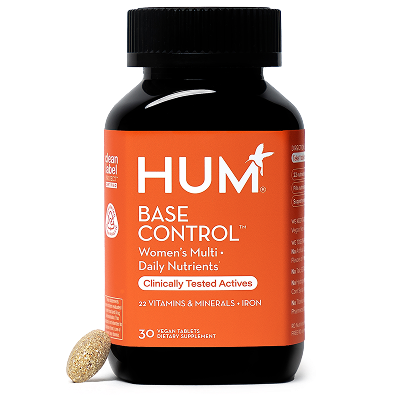
]]>Your thoughts are so helpful and appreciated; we love hearing what you have to say, and other customers do too. Plus, when you write a review on our site, you’ll be entered into our monthly giveaway with a chance to win a FREE HUM product of your choice!
How it Works
1. Visit https://www.humnutrition.com/#
2. Select the product you want to review
3. Leave your honest feedback
4. Winners will be notified by email
Want more ways to win?
1. Post a new review to your personal social profile, blog or where HUM is sold
2. Email the link with the review to love@humnutrition.com
3. Each new review that you email qualifies as an additional entry as long as it doesn’t include your referral code
4. Winners will be notified via email or direct message on social
The post Love HUM Vitamins? Get Them for Free! appeared first on HUM Nutrition Blog.
]]>The post Candida Overgrowth: What You Need to Know appeared first on HUM Nutrition Blog.
]]>What is Candida?
Candida albicans is a type of yeast that exists as a natural part of our microbiome. It affects our mucous membranes and can be found in our mouths, vaginas, and skin among other areas. When in balance, it shouldn’t cause any problems. However, an overgrowth of candida albicans can result in a myriad of both physical and internal symptoms. Symptoms of Candida Overgrowth Some symptoms of a candida imbalance may include…- constipation
- bloating/gas
- constipation/diarrhea
- bloating
- fatigue
- lethargy
- brain fog
- skin rashes
- vaginal discomfort
How Do You Know If You Have Candida Overgrowth?
The most accurate way to determine if you have candida overgrowth is with primary lab testing, says Storm. You can test your stool, saliva, or blood.Causes of Candida Overgrowth
As with all things in our microbiome, candida lives in a delicate state of balance. An overgrowth occurs when either the protective forces that keep candida in check are eliminated –– or, candida is overfed by exacerbating forces. Let’s take a closer look at some of the key contributors to candida overgrowth:Diet
Storm says that a diet that’s high in sugar or refined carbohydrates can leave you susceptible to a candida overgrowth. Other food groups that may exacerbate candida overgrowth include dairy, animal proteins, caffeine, alcohol, and processed foods.Stress
In her book, Boroch reminds us that elevated cortisol increases blood sugar. “Candida doesn’t care whether the increased sugar in your body is the result of eating a candy bar or another tough day at work; it will use the sugar as fuel to reproduce,” she writes.Environment
Yeast thrives in warm, moist environments. For that reason, we are extra susceptible to yeast overgrowth in areas of our bodies with these qualities. For example, you may experience a yeast overgrowth from wearing damp swimsuit bottoms for too long. Similarly, babies can get a yeast rash from wet diapers. Or, an overgrowth of yeast in the mouth may present as thrush.Antibiotics & Medication
Antibiotics and medications can be a powerful and life-saving resource when needed. But, in the same way that they wipe out bad bacteria that make us sick, they also wipe out all the good bacteria that keep yeast in check. Storm shares that just one full round of antibiotics is enough to wipe out enough of the good bacteria in your gut so that candida has room to overgrow. For that reason, it’s important to only take antibiotics and medications when needed. “For example, many of my clients have been prescribed antibiotics when they have a cold or the flu––even though […] colds and flu are viral infections and not bacterial ones,” Boroch writes. When antibiotics are called for, be sure to follow up with probiotics to help replenish the good bacteria that work against candida overgrowth.How Do You Get Rid of Candida Overgrowth?
First off, stay away from antibiotics if at all possible, Storm advises. Next, change your diet for at least six weeks—but ideally 10-12 weeks—so that you’re not overfeeding the candida. They need glucose and sugar to thrive, so it also means reducing your carbs. Storm recommends going down to 50 grams of carbs or less, nixing most sugars, and eliminating grains and fermented products. Finally, reduce your fruit intake to one serving per day or less. Additionally, taking a daily probiotic like HUM’s Private Party to feed good bacteria can support your fight against candida overgrowth. Storm also recommends herbs to help eliminate candida overgrowth. Her top three: Pau d’Arco, oil of oregano, and grapefruit-seed extract. “Candida is smart, so it can adjust to treatment,” says Storm, so she recommends rotating these herbs every four to five days. If you were eating super clean and have a slip-up, you luckily don’t have to start over completely. Storm says to add one or two weeks to your candida cleanse. However, you may experience fatigue, mental fog, or sugar cravings.Managing Candida Longterm
“If you’ve had candida overgrowth, you’re more likely to have it in the future,” says Storm. To keep candida growth bay, you can up your carb intake a bit but keep it under 100 grams or less per day, and only consume whole-food carbs. You should also completely avoid refined carbs. You’ll also be more sensitive to fermented foods, so consume them sparingly, she says.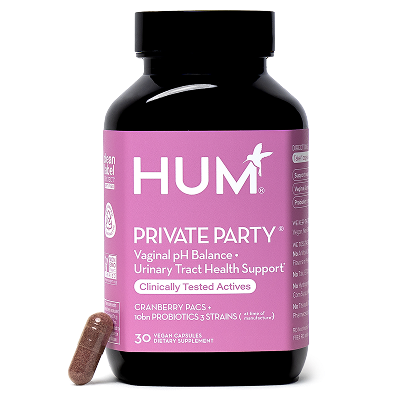
The post Candida Overgrowth: What You Need to Know appeared first on HUM Nutrition Blog.
]]>The post The Best Yoga Poses for Period Cramp Relief appeared first on HUM Nutrition Blog.
]]>
The post The Best Yoga Poses for Period Cramp Relief appeared first on HUM Nutrition Blog.
]]>The post Retinol in Your 20s? These Experts Say Yes appeared first on HUM Nutrition Blog.
]]>First, What Is Retinol?
Retinol, aka vitamin A, is a topical skin treatment that increases skin cell turnover. Further, it helps “refine the skin and reduce the signs of aging often by environmental factors,” says Dr. Nichols. “Your skin endures bacteria and environmental pollution daily, which can show signs of premature aging if not protected each day and night,” she continues.What Does Retinol Do?
The benefits of retinol aren’t only limited to anti-aging. “Retinol minimizes fine lines and wrinkles,” Dr. Nichols says. It also “diminishes hyperpigmentation, blackheads, and dark spots.” Shani also adds that using retinol can increase collagen production and help make skin look tighter and younger. Even further, Dr. Nichols says additional benefits of retinol include:- reduced redness
- less inflammation
- smaller pore size
- smoother skin
- fewer breakouts
Should You Start Using Retinol in Your 20s?
“Absolutely!” says Dr. Nichols. “Retinol is safe to use for men or women in their 20s to help boost collagen and reduce signs of premature aging, such as creepiness, age spots, and fine lines.” Shani agrees. In your 20s, she explains “signs of aging start to appear, so it’s best to ensure you’re on a good skincare routine early.” If you wait until later, it’ll be more difficult and potentially less effective to get your skin to bounce back. (For the record, Shani practices what she preaches: She’s been using retinol since she was 23.)What Retinol Should I Use?
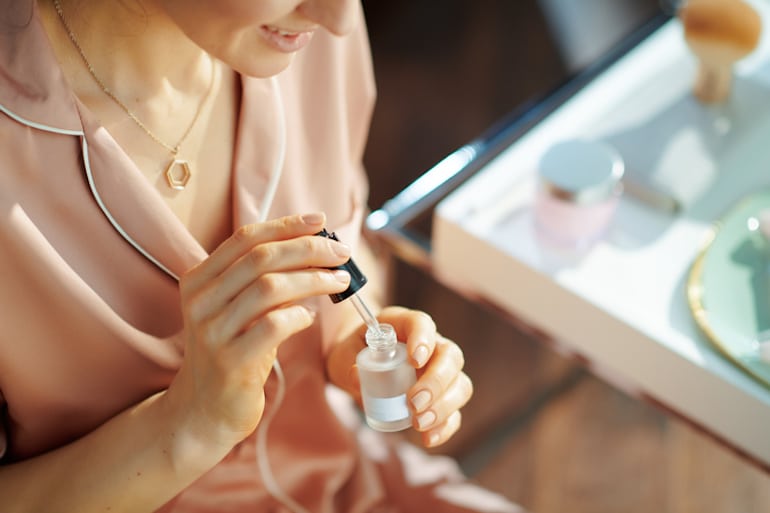
You don’t have to get a prescription for retinol, and there are plenty of stellar over-the-counter options available. That said, it’s important to choose a retinol serum that works for your skin type, especially if you have sensitive skin. “I think it’s important to consult a skincare professional to determine which retinol is best suited for your skin type,” Shani explains. “My Retinol Reform is a gentle yet effective option that’s great for most skin types.” (Bonus: Celebs like Jessica Alba are mega fans.)How to Use Retinol
Lastly, here are a few quick tips for using retinol.How Often to Use Retinol
Shani recommends start with retinol one night a week. From there, gradually build up usage since retinol can be drying. Once you’ve built up tolerance, applying it three nights per week is generally recommended.When to Apply It
Be sure to apply retinol only at night and always follow with moisturizer.How much retinol do I need?
Note that using more product won’t make it more effective. Dr. Nichols says you should only need about a penny-sized drop to cover your entire face.Protect Your Skin with SPF
Finally, make sure you’re extra diligent about wearing sunscreen when using retinol, since it can make your skin extra sensitive to sun exposure. Also, if you don’t wear sunscreen, you’ll end up causing exactly what you’re trying to prevent.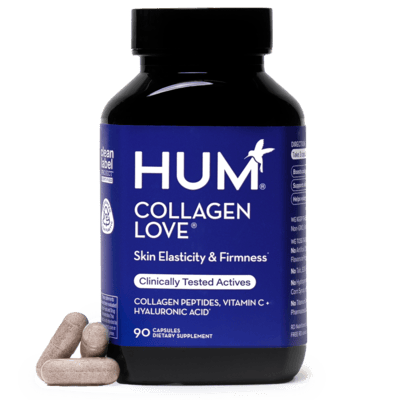
The post Retinol in Your 20s? These Experts Say Yes appeared first on HUM Nutrition Blog.
]]>The post 4 Scary Ingredients Hiding in Your Skincare Products appeared first on HUM Nutrition Blog.
]]>Sodium Lauryl Sulfate
Commonly Found In: Cleansers
This ingredient lives up to its scary-sounding name. “This is a harsh and inexpensive surfactant that foams,” explains esthetician and certified holistic nutritionist Pearl Dworkin. “It can be especially irritating when you combine them with other inflammatory ingredients, like synthetic fragrances.” Because it’s been found to be sensitizing, it can cause skin issues and trigger allergies.Oxybenzone
Commonly Found In: Sunscreen and Moisturizers
While oxybenzone protects skin from most UVB and UVA rays, it raises concerns because it’s been linked to skin irritation and allergies. Most troubling: The Environmental Working Group (EWG) advises not to use products containing this chemical because it may disrupt your hormones.Methylisothiazolinone, Methylchloroisothiazolinone, and Benzisothiazolinone
Commonly Found In: Cleansers and Moisturizers
These icky preservatives are sensitizing and can cause contact allergies. The EWG states that lab studies have suggested that methylisothiazolinone could be neurotoxic. While other other reports have suggested that it’s not sensitizing when used at a concentration of 0.01% or less, the jury is still out on just exactly how sensitizing this product is.Fragrance
Commonly Found In: Moisturizers and Cleansers
Yes, fragrance may make your products smell pretty, but they’re one of the top allergens in the world, according to the EWG. What makes added fragrances in beauty products even more worrisome? In the United States, fragrance formulas are considered “trade secrets,” so companies aren’t required to disclose the chemicals used to create scented formulas.
The post 4 Scary Ingredients Hiding in Your Skincare Products appeared first on HUM Nutrition Blog.
]]>The post A Nutritionist-Approved CBD Chocolate Shake Recipe appeared first on HUM Nutrition Blog.
]]>Why This REcipe Is So Good For You
First, high-grade CBD oil has “neuroprotectant properties that bring the body into balance,” Talbot explains. She likes to use the Charlotte’s Web brand. “Studies show that it can be highly effective in treating anxiety, depression, and pain.” In addition, she says, when you combine CBD oil with nutrient-dense superfoods, it can help protect the body from free-radicals and premature aging. Then, coconut meat is a good source of lauric acid. “Lauric acid is said to have antibacterial and anti-fungal properties,” says Talbot. “Raw coconut meat is digestion-friendly, rich in enzymes, and lends itself to supple, glowing, and hydrated skin.” Also, raw coconut water is rich in electrolytes, which help replenish your body and balance fluid retention, she explains. “Finally, cacao is naturally rich in theobromine, which stimulates feel-good endorphins,” says Talbot. She adds that it’s also a great source of magnesium, which is great since she says most people are magnesium-deficient. And of course, Raw Beauty contains 39 different superfoods – plus adaptogens and probiotics for well-rounded recipe.0 minutes
0 minutes
1
INGREDIENTS
INSTRUCTIONS
The post A Nutritionist-Approved CBD Chocolate Shake Recipe appeared first on HUM Nutrition Blog.
]]>The post How to Make Natural Food Coloring appeared first on HUM Nutrition Blog.
]]>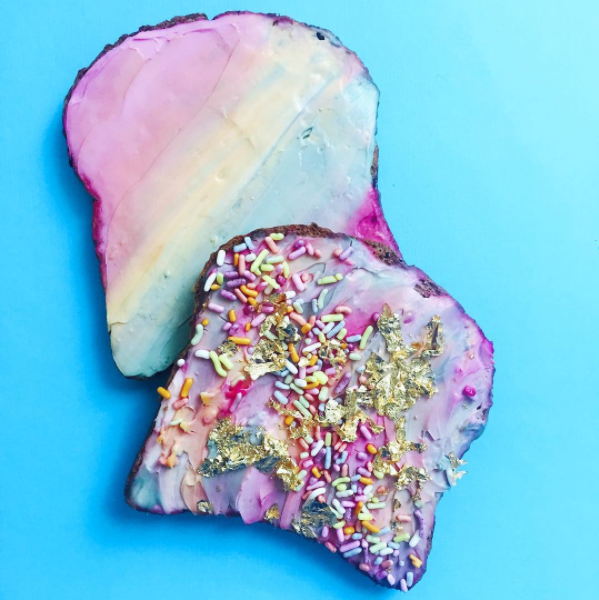 (Above: Unicorn toast made with natural food coloring, by @vibrantandpure.)
Natural Food Coloring: Pink
You can make a pink natural food dye using beets! Simply wash the beet, and add it to a blender with 1/2 cup water. Blend it until smooth, then strain. The liquid is your natural food dye.Natural Food Coloring: Yellow
We’ve waxed poetic about the amazing benefits of turmeric, but we haven’t discussed its natural food dye abilities. If you’ve ever used turmeric, you know it stains countertops, clothes, skin, etc like crazy, so keep that in mind when making this food dye and be cautious. Mix 1/2 cup water and 1 teaspoon of ground turmeric in a saucepan, and then boil. Allow to cool. Store it in the fridge for up to two weeks.Natural Food Coloring: Green
The combination of matcha powder and spinach creates a gorgeous green natural food coloring that’s perfect for creating a ‘grammable batch of unicorn cookies. Combine 1 tablespoon of matcha powder, 1/2 cup fresh spinach, and 1/2 cup water in a blender. Blend until smooth, then strain. The liquid is the natural food dye.Natural Food Coloring: Purple
Despite their name, blueberries make a gorgeous natural purple food dye. Combine 1/4 cup fresh blueberries with 1/8 cup of water in a blender. Blend until smooth, then strain. The purple liquid is the natural food coloring. You’d be surprised—because these natural ingredients are so pigmented, it only takes a tiny bit. Meaning: The taste won’t be overpowering.
The post How to Make Natural Food Coloring appeared first on HUM Nutrition Blog.
]]>The post 3 Pressure Points That Help Relieve Stress appeared first on HUM Nutrition Blog.
]]>What is Acupressure?
Acupressure is a practice rooted in Traditional Chinese Medicine (TCM). Studies suggest that it can help manage and treat various issues, including but not limited to:- stress
- fatigue
- nausea
- headaches
3 Healing Acupressure Points for Stress
Locate and massage these popular pressure points to relieve stress.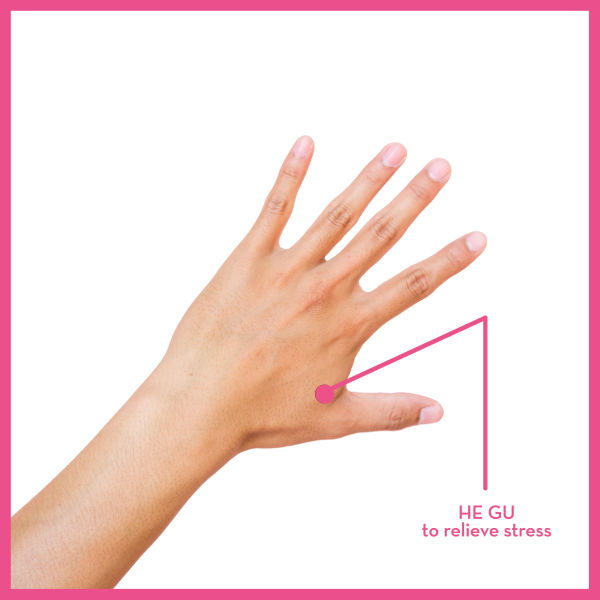
1. He Gu (LI4)
You can locate the He Gu (LI4) pressure point between the web of your thumb and index finger, at the highest point of the muscle. The He Gu acupressure point has been thoroughly studied in clinical settings. Research shows that it’s not only a terrific pressure point to relieve stress, but also helps to:- reduce constipation
- lighten headaches + tension
- relax the jaw + reduce associated pain
- ease overall pain
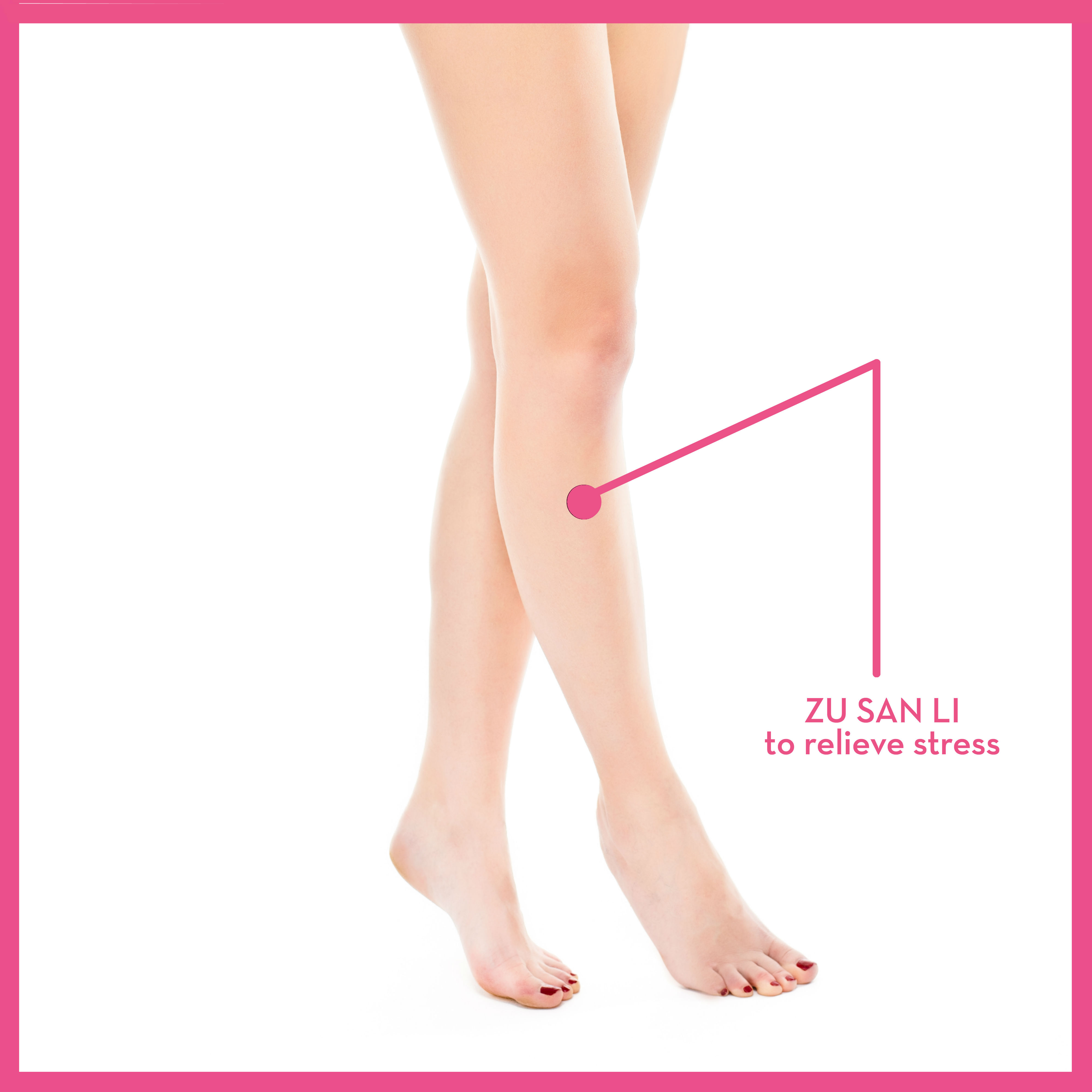
2. Zu San Li (ST36)
Further down on your body, you can find the Zan San Li (ST26) pressure point by placing four fingers beneath your kneecap. From there, move horizontally to the outside of your shin. (To ensure this is the right spot, wiggle your foot up and down. You should feel a muscle moving.) In addition to relieving stress, Zan San Li can also help:- alleviate GI distress
- relieve nausea
- improve fatigue
3. Tai Chong (LV3)
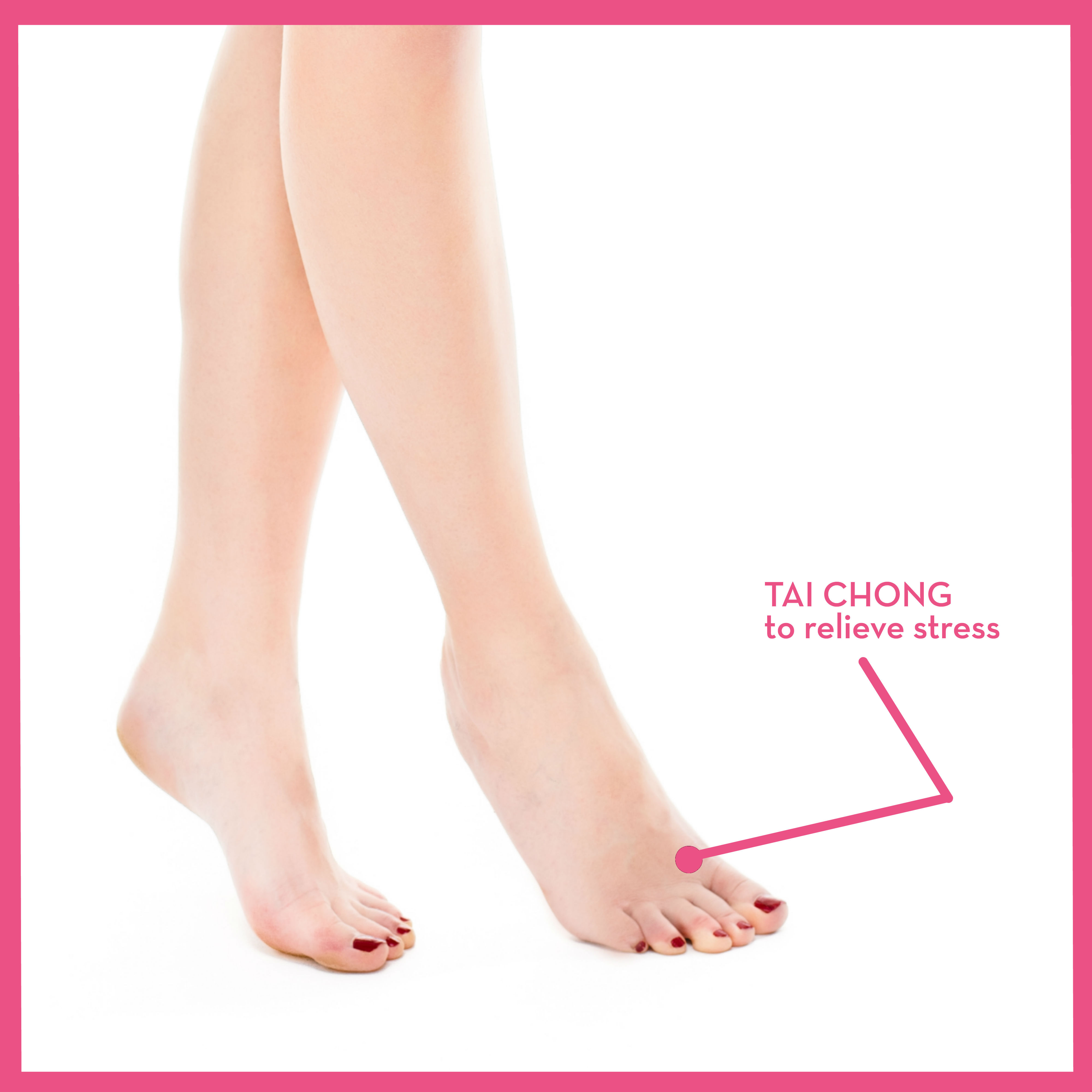
To find the Tai Chong (LV3) pressure point, locate the space between your big toe and your second toe. From the place where the skin meets, move up about two finger widths. Similar to the acupressure points for stress above, Tai Chong puts in extra work by coming to the rescue for other wellness concerns. Stimulate this point to:- alleviate lower back pain
- reduce the severity of cramps
- fall asleep more easily
- move liver qi
Final Thoughts
Feeling calmer thanks to acupressure for stress? We hope so! And now that you’re committed to a natural stress-fighting regimen, why not add some adaptogens and other herbal remedies to your routine? As noted earlier, I’m a huge fan of rhodiola rosea. Plus, when you’re ready for bedtime, consider reaching for valerian root to help you wind down.
The post 3 Pressure Points That Help Relieve Stress appeared first on HUM Nutrition Blog.
]]>